
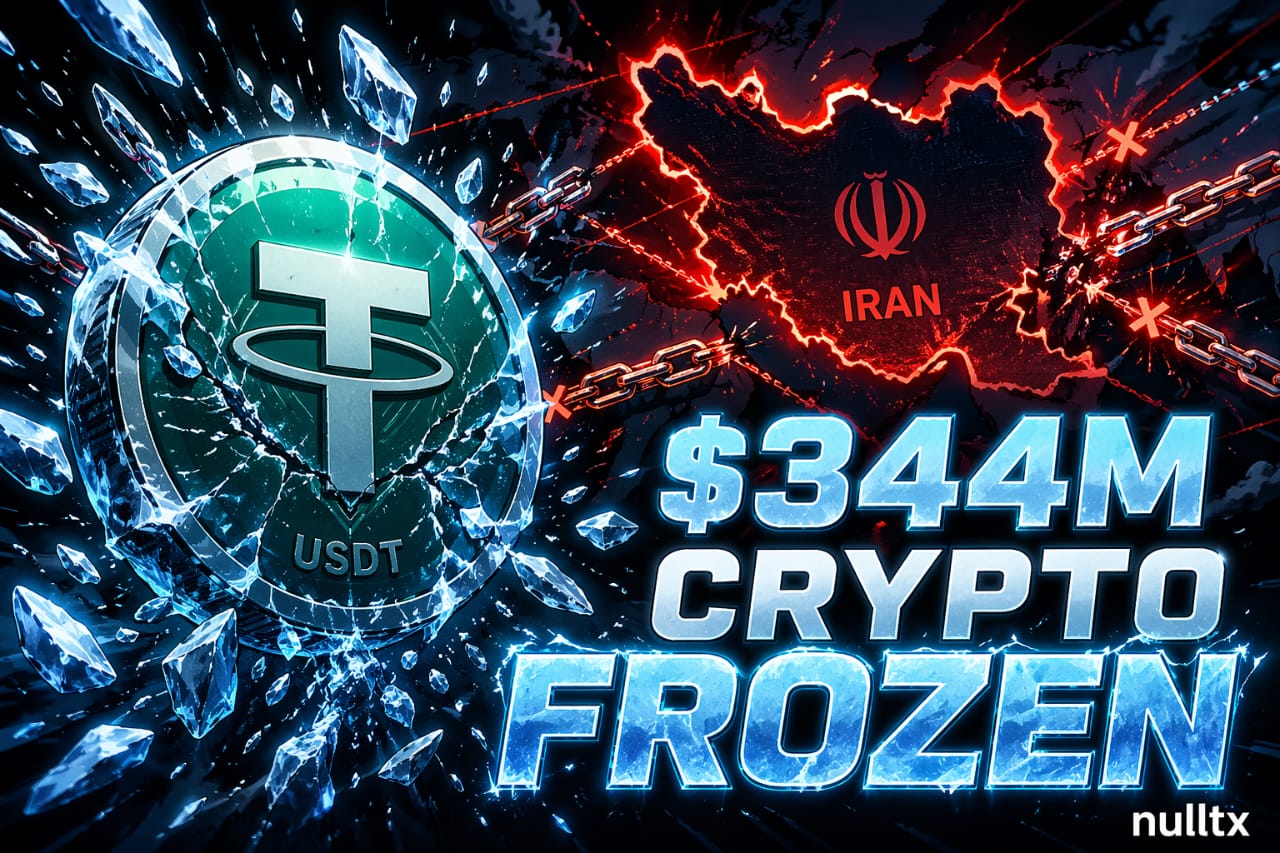
The freezing of $344 million in cryptocurrency, part of a broader economic pressure campaign against Iran on the part of the Trump administration, is one of the largest enforcement actions ever involving digital assets in a geopolitical confrontation.
The decision comes amid a fragile truce and months of stagnation in diplomatic efforts to halt the fighting.
The Treasury seized $3.65 million worth of funds beholden to Tether because intelligence indicated a link to Iranian financial networks. U.S. officials say the operation is part of a larger effort to cut off Tehran’s financial lifelines that support economic activity even amid heavy sanctions.
Treasury Secretary Scott Bessent emphasized this action is not standalone. He noted that the authorities will continue to track and seize funds linked to Iran, especially those transmitted internationally via virtual currency.
Tether And US Authorities Work Together To Investigate And Freeze Funds
The freeze was implemented with direct cooperation between U.S. law enforcement agencies and the Office of Foreign Assets Control (OFAC), as it supplied information directly tying those assets to an extortion scheme, including sanctions evasion. Responding to the information, Tether froze the reserves of two Tron blockchain addresses preventing any further transfers.
Tether’s announcement said that the freeze came as a result of information from several U.S. agencies, and was followed up by them. The activity was termed by the company as related to illegal activities and reiterated its commitment to partner with regulators and law enforcement agencies worldwide.
Blockchain analytics determined “substantial ties” between the wallets and Iranian individuals, an official told the U.S. These links consist of confirmed transactions that are reported by Iranian cryptocurrency exchanges and with intermediary addresses with these wallets related to the Central Bank of Iran.
Tether Supports Freeze of More Than $344 Million in USD₮ in Coordination with OFAC and U.S. Law Enforcement
Learn more: https://t.co/PFMCimX9hV— Tether (@tether) April 23, 2026
Crypto As A Channel In Sanctions Evasion
This maneuver showcases the growing dependence of heavily sanctioned entities on crypto to work around restrictions placed upon conventional monetary infrastructures. Countries such as Russia and North Korea, like Iran, have also started implementing digital assets to keep their economic activities active under sanctions.
In the case of Iran, blockchain analytics suggest that its cryptocurrency holdings grew to about $7.8 billion by 2025 as adoption surged. Much of the wealth tracked by OFAC is related to IRGC-affiliated corporations, which have a commanding presence within Iran’s economy. Analysts point out that Iranian actors have become adept at disguising their activities in transactions.
They involve sending funds to a series of intermediary wallets and using multi-step transaction structures to avoid detection on the blockchain. History showed similar activity pattern with those frozen wallets as well, dealing with huge transfers in the size of up to tens of millions dollars between private wallets. These types of behaviours are consistent with techniques used by sanctioned entities to quietly move funds, experts note.
Global Sommitements to “Increase Crypto Oversight” Raise Uncertain From Impact
However, within experts there is still a debate over the overall impact of the freeze rate. Although seen as a landmark action, some analysts argue that it will not significantly cripple Iran’s overall financial apparatus since the country has repeatedly shown its ability to overcome sanctions.
The measure was described as “meaningful” by Daniel Tannebaum, a senior fellow at the Atlantic Council, but he added that it would likely not fundamentally hamper Iran’s ability to operate in a business-as-usual environment. He said that Iran has established alternative mechanisms, including working with third-party actors, to keep its economy afloat.
But the greater significance is that it demonstrates increasing state enforcement in crypto. This case shows that whilst blockchain technology is designed to be transparent, it also allows authorities to track and intervene in suspicious activity, especially where such action is underpinned by centralised bodies like stablecoin issuers.
At the same time, that development continues to evoke nagging questions about decentralization. Increasing government intervention and cooperation between companies and enforcement engages a higher degree of tension with open financial systems than ever before.
The $344 million freeze is, after all, about more than just another enforcement effort. It marks the transition away from a world where cryptocurrency played on the periphery of global finance toward one where it has a seat at the table, and is subject to the same geopolitical forces that dictate how traditional economic systems are run.
Disclosure: This is not trading or investment advice. Always do your research before buying any cryptocurrency or investing in any services.
Follow us on Twitter @nulltxnews to stay updated with the latest Crypto, NFT, AI, Cybersecurity, Distributed Computing, and Metaverse news!