
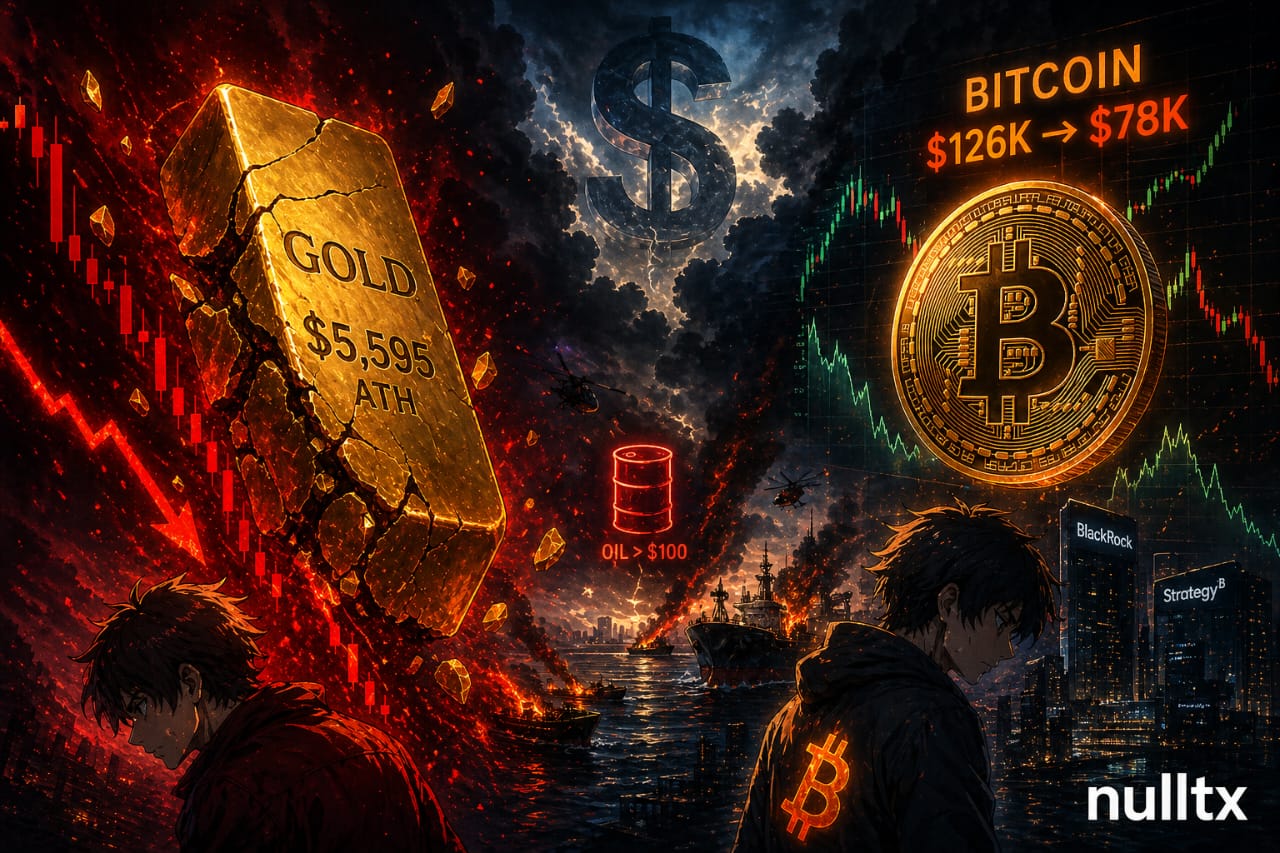
If you had told someone at the start of this year that gold would hit an all-time high above $5,500 an ounce and then give back nearly a fifth of its value in weeks, they would have called you dramatic.
And yet, here we are. Gold is sitting at roughly $4,699 today. Bitcoin is hovering around $78,000, quietly having one of its worst starts to a year in recent memory. And Google Trends says it all: people are searching “gold price” at nearly four times the rate they’re searching “Bitcoin.”
That last detail alone tells you where the public’s attention went in 2026. Not where the crypto crowd expected.
Contents
How Gold Price Got Here
Gold’s year started beautifully, almost too beautifully. Central banks were buying at record pace, the Fed had just cut rates three times at the end of 2025, and investors were piling in. By January, gold touched $5,595 per ounce, a number that would’ve seemed absurd two years ago.
Then February 28th happened. The U.S.-Iran conflict broke out, the Strait of Hormuz effectively closed, and oil prices shot above $100 a barrel and stayed there. That sent inflation climbing again. February’s producer price index came in at +0.7%, way above expectations. The latest CPI landed at 3.3%, the highest since May 2024. Suddenly, instead of rate cuts, markets were pricing in the Fed staying higher for longer. Maybe even tightening.
Here’s the cruel irony: gold didn’t fall because the world got safer. It fell because rising oil prices created an inflation problem that pushed real yields higher, and gold, which pays no interest, becomes less attractive when Treasury yields climb. The 10-year yield jumped to 4.2%. The Dollar Index pushed toward 99.9. That’s a brutal combination for the yellow metal.
By March 19th, gold had crashed through the $5,000 level it had held for months, losing about 6% in two sessions. ETF holders panicked and sold. Futures traders got margin-called. The World Gold Council reported ETF outflows peaking at 14 tonnes in a single day. Meanwhile, people buying actual physical gold, coins, bars, barely flinched. Physical premiums stayed elevated. The crash was mostly a paper market story. The chart looked scary. The fundamentals told a different story.
Where Things Stand Now
As of today, gold is recovering slightly after Iran reportedly submitted a new ceasefire proposal. But then Trump cancelled the planned diplomatic talks, Iran dug in, and gold gave back the gains. We’re essentially watching Middle East negotiations trade the gold market day by day.
The bulls haven’t given up. J.P. Morgan still has a $6,300 target for Q4 2026. Wells Fargo is in the $6,100–$6,300 range. The structural case, central banks still buying, weak dollar outlook, massive U.S. fiscal deficits, hasn’t changed. It’s just on hold while the macro picture sorts itself out.
Bitcoin’s Peculiar Problem
Bitcoin’s 2026 has been quietly brutal. It peaked at $126,000 back in October 2025, closed the year about 30% below that, then kept sliding: down roughly 10% in January, nearly 15% in February, a barely-there gain in March. Its first back-to-back quarterly losses since 2022.
The strange part? The institutional infrastructure keeps expanding. Strategy announced it now holds 780,897 Bitcoin after spending another $1 billion in April. BlackRock launched its Bitcoin Income ETF, ticker $BITA, designed to generate yield from Bitcoin’s own volatility. Charles Schwab launched direct spot crypto trading for Bitcoin and Ethereum. These are not small developments.
And yet the price hasn’t responded the way you’d expect. Why? Because when the Hormuz crisis hit and markets got nervous, investors sold Bitcoin first and asked questions later. It dropped alongside tech stocks. It behaved like a risk asset, not a store of value. Gold, with centuries of track record, is what institutional money defaults to when the world feels uncertain. Bitcoin is still auditioning for that role.
What Google Trends is Saying About Gold Price And Bitcoin
The Google Trends chart captures this whole story neatly. In early February, “gold price” and “Bitcoin” were running nearly even in search interest.
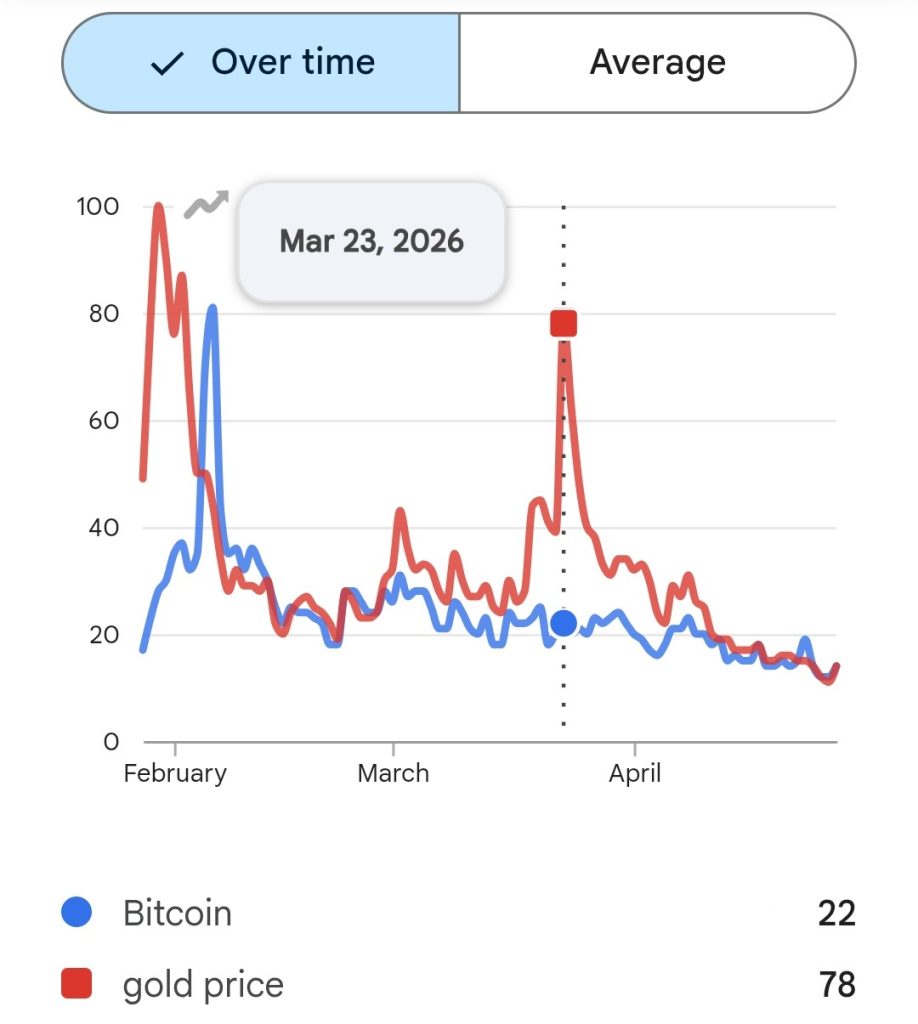
By late March, gold was at 78 and Bitcoin was at 22. Today, both sit at 14, a market holding its breath ahead of the Fed meeting April 28–29 and Q1 GDP data on April 30th.
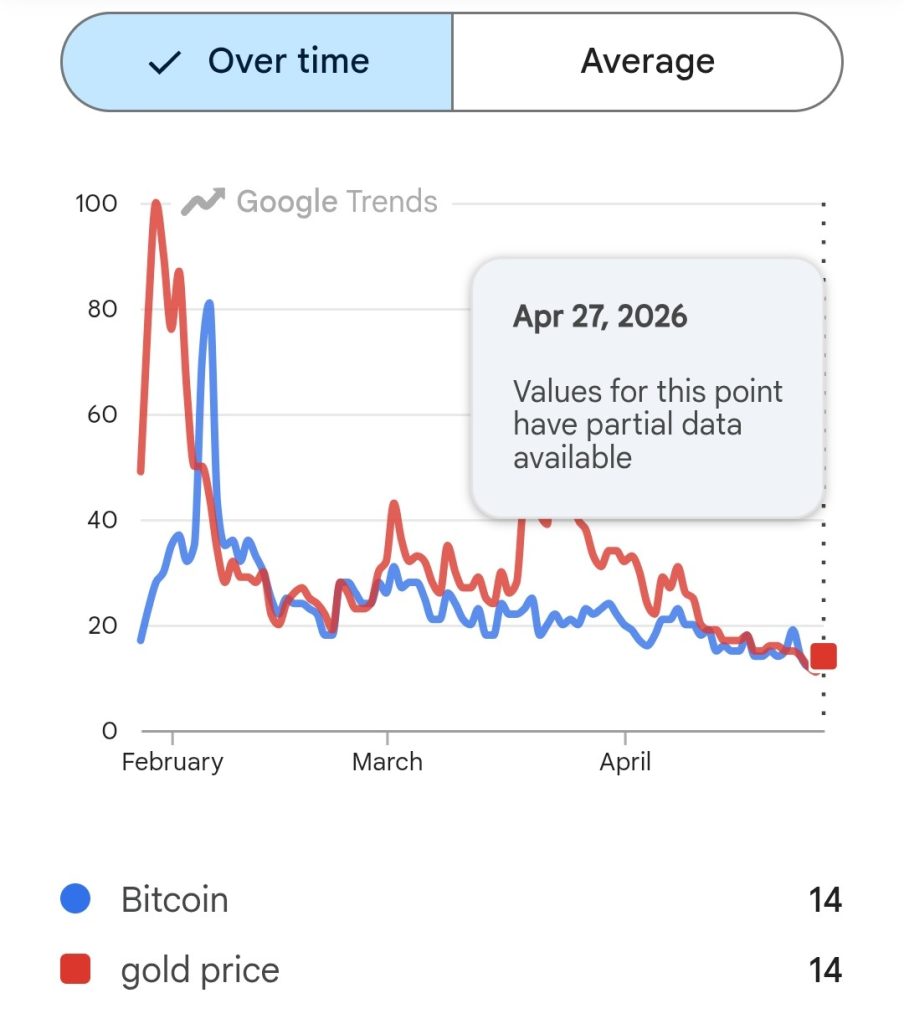
Gold is winning the macro narrative, even after its correction. Bitcoin has more institutional backing than ever, but less price momentum than it should. Somewhere in that gap is probably where the real story of the second half of 2026 gets written, for whoever has the patience to wait it out.
Please note, Data from Google Trends, CoinMarketCap, GoldPrice.org, and verified news sources. For informational purposes only, not financial advice.
Disclosure: This is not trading or investment advice. Always do your research before buying any cryptocurrency or investing in any services.
Follow us on Twitter @nulltxnews to stay updated with the latest Crypto, NFT, AI, Cybersecurity, Distributed Computing, and Metaverse news!