

Mt. Gox is moving Bitcoin again, leveraged positions are getting torched at a historic pace, and traders are watching key support levels crumble in real time.
Thursday turned into one of the most brutal single-day wipeouts the market has seen since January 2026, and the structural pressure behind it is not going away anytime soon.
Contents
Mt. Gox Sends 116 BTC to Bitstamp, Creditor Repayments Continue
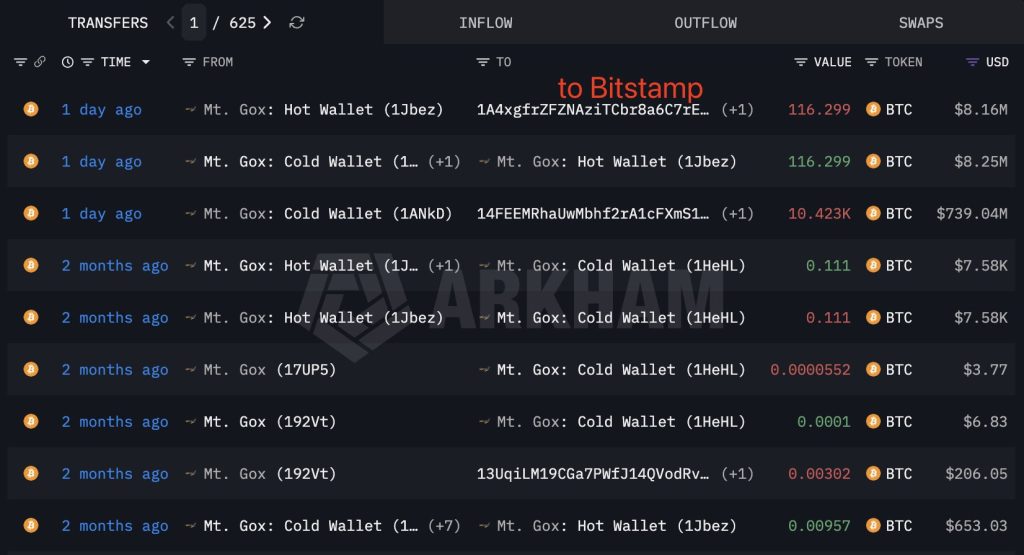
On-chain data confirmed that Mt. Gox transferred 116.3 Bitcoin to the Bitstamp exchange, the latest move in a creditor repayment process that has been running for over a decade since the exchange’s catastrophic 2014 hack.
Mt. Gox is dumping $BTC!
Mt. Gox wallets have deposited 116.3 $BTC($8.16M) into #Bitstamp.https://t.co/7NqYYfAxGT pic.twitter.com/syc71JAcpB
— Lookonchain (@lookonchain) June 4, 2026
This transfer follows a much larger internal move of over 10,400 BTC that the defunct exchange executed just a few days prior. That earlier transaction had already rattled sentiment across the market, and Thursday’s deposit to Bitstamp signals the distributions are picking up pace.
Mt. Gox currently holds around 34,500 BTC, worth approximately $2.4 billion at current prices, and faces a hard deadline of October 31, 2026 to complete all outstanding creditor distributions. Every transfer it makes to exchanges like Bitstamp raises the same concern among traders: creditors who have waited years for their funds are likely to sell.
Why These Transfers Keep Spooking the Market
The fear is rational, even if the actual impact is gradual. When Mt. Gox moves Bitcoin to an exchange, it signals that creditors are receiving or preparing to receive funds. Many of those creditors have been waiting since 2014, more than a decade, and a significant portion are expected to liquidate their holdings once they gain access.
That kind of selling does not happen all at once, but the anticipation alone creates overhead resistance. Every time a new transfer surfaces on-chain, traders price in the possibility of fresh supply hitting the market. It is a dynamic that has haunted Bitcoin’s price action for years, and it continues to do so as the repayment clock ticks down toward October 2026.
The broader picture, though, is that this is a planned, multi-year recovery process, not a panic sale. The transfers are structured, the timeline is known, and the total supply overhang is finite. What the market struggles with is timing, not the fundamental reality.
$1.8 Billion in Leveraged Positions Liquidated in One Day
Beyond Mt. Gox, Thursday brought a market-wide flush that analysts described as the largest single-day liquidation event since January 2026. Over $1.8 billion in leveraged crypto positions were wiped out as Bitcoin broke below $63,000 and Ethereum fell under $1,800.
BREAKING: A total of $1.8 billion in levered crypto positions were liquidated today.
This marks the largest daily crypto liquidation since January 2026.
— The Kobeissi Letter (@KobeissiLetter) June 4, 2026
The scale of it matters. Liquidations at this level do not happen in a vacuum, they reflect excessive leverage that had been building quietly in the system, waiting for a trigger. When BTC sliced through $63K, it set off a cascade.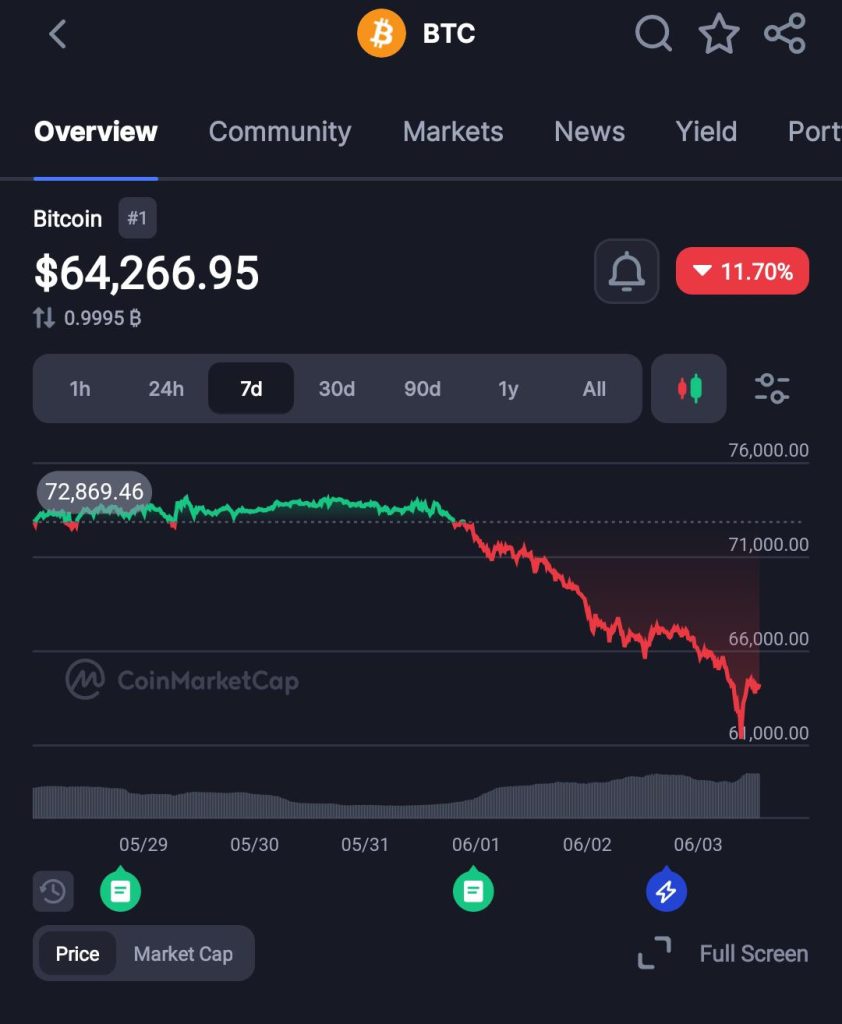
Long positions started getting forcibly closed, which pushed prices lower, which triggered more liquidations, which pushed prices lower still. The loop repeated until the tape was covered in damage.
Structural Selling Is Driving This Move, Not Just Leverage
What makes this particular selloff harder to dismiss as noise is the combination of forces driving it simultaneously. The liquidation cascade alone would have been manageable. But it is happening at the same time as several other forms of structural selling.
FG Nexus is actively dumping Ethereum into the market. Mt. Gox is depositing Bitcoin to exchanges. And a prominent whale on Hyperliquid is sitting more than $58 million underwater, creating additional uncertainty about whether that position forces further selling or triggers a broader market unwind.
These are not random actors reacting emotionally to price swings. They represent large, deliberate moves, and together, they are overwhelming whatever buying pressure exists at current levels. Until that structural selling pressure exhausts itself, every bounce the market puts up risks being a dead-cat rally rather than a genuine reversal.
Key Levels Traders Are Watching Right Now
BTC is trading below $63,000 with no clear support printed on the chart yet. The breakdown through that level was sharp enough that technicians are not yet calling a floor, the market needs to find buyers who hold a level convincingly before anyone maps a line and calls it support.
Ethereum is in a similar position. ETH is trading under $1,800, with $1,789 standing as the last meaningful technical defense. If that level breaks on volume, the next area of demand becomes difficult to define precisely, which adds to the uncertainty weighing on short-term sentiment.
The phrase traders are using right now is that the flush needs to complete. Liquidation-driven selloffs typically mark capitulation zones, but only after the selling has fully washed through the system. The danger of calling a bottom too early is that the structural sellers are still active. Funding rates remain elevated, meaning more leveraged longs are still exposed. Until funding turns neutral and liquidation volume contracts meaningfully, the market remains vulnerable.
Disclosure: This is not trading or investment advice. Always do your research before buying any cryptocurrency or investing in any services.
Follow us on Twitter @nulltxnews to stay updated with the latest Crypto, NFT, AI, Cybersecurity, Distributed Computing, and Metaverse news!