
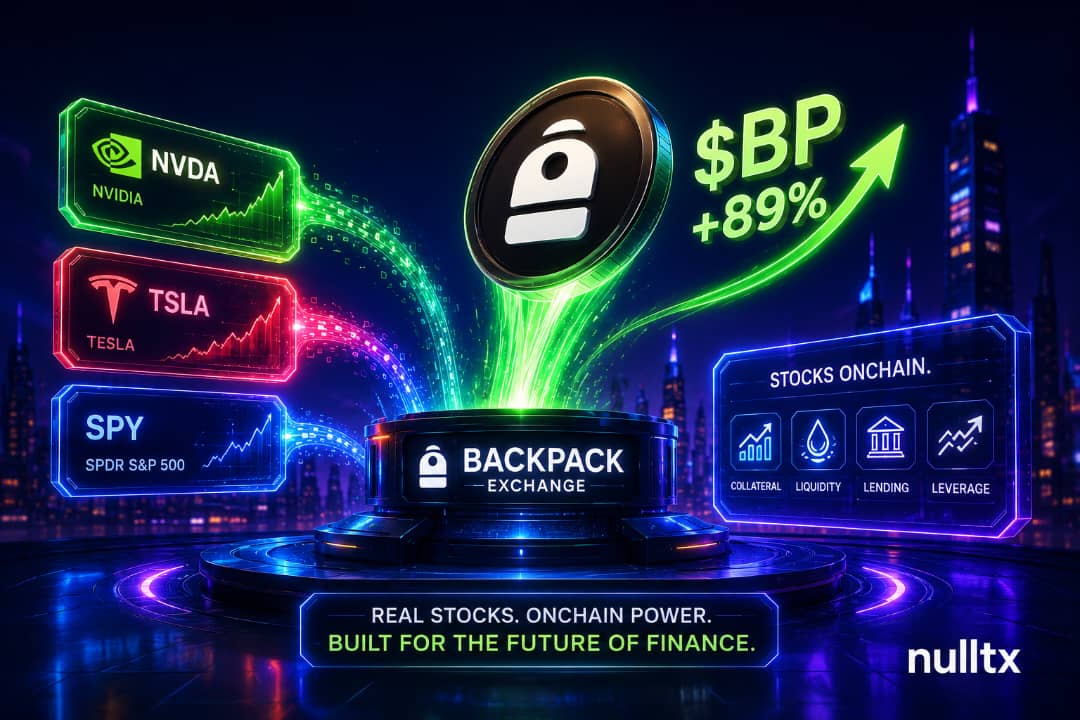
Backpack’s native exchange token $BP surged 89.2% in a single day after the platform announced Backpack Securities, a regulated trading platform that does not just let users buy U.S. stocks, but moves those stocks onchain and connects them to DeFi.
The market responded immediately. And once you understand what Backpack is actually building, the excitement starts to make sense.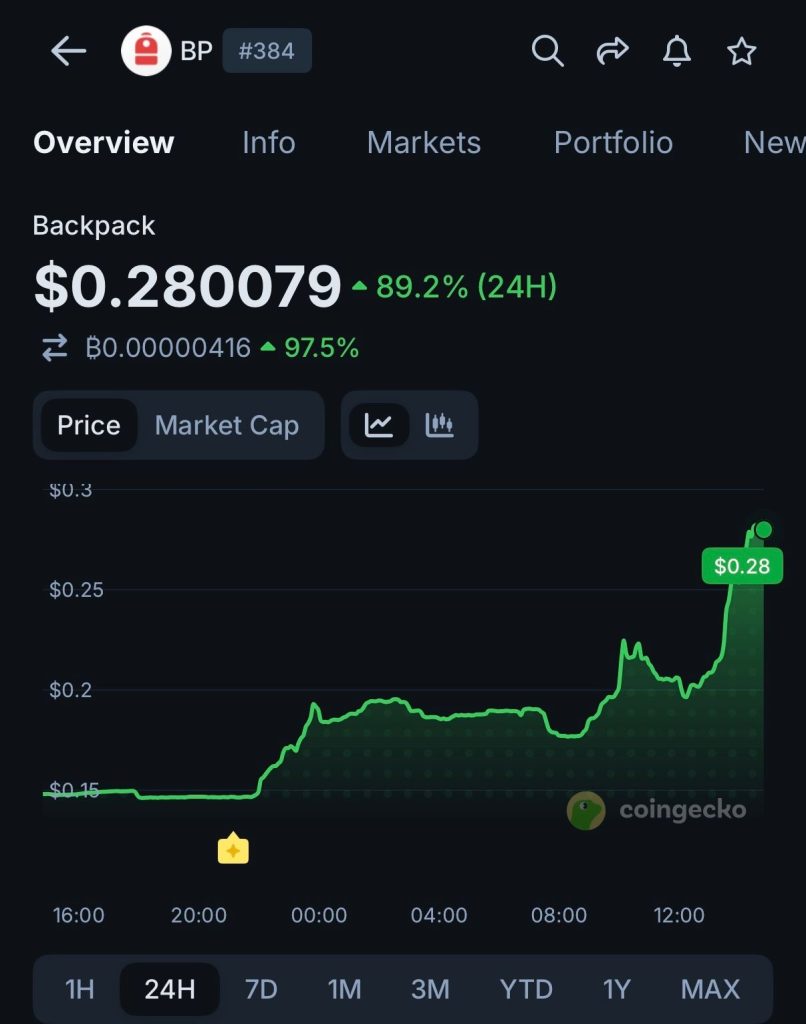
This is not another exchange slapping a brokerage license on its app. This is something structurally different, and the gap between what Backpack is doing and what everyone else is doing is wider than the price chart suggests.
INSIGHT: $BP surged 89.2% today after launching a securities platform that integrates traditional and tokenized stock trading. pic.twitter.com/uhAsumYk2c
— CoinGecko (@coingecko) June 3, 2026
What Backpack Securities Actually Is
Backpack is rolling out Backpack Securities next week , bringing regulated U.S. stocks and ETFs onchain while enabling transfers between traditional brokerage accounts, crypto wallets, and DeFi applications. The platform is built on Solana, and it is designed to let users hold real stock positions, NVDA, TSLA, SPY, and others, in the same account logic that manages their crypto assets.
— Backpack 🎒 (@Backpack) June 2, 2026
The key word is real. These are not synthetic tokens that track stock prices. These are actual U.S. stock holdings, accessed through regulated brokerage infrastructure, that can then be converted into onchain formats and used across decentralized finance. Users get the full traditional package, NYSE and Nasdaq liquidity, dividends, corporate actions, and stock transfers, plus the ability to flip those same assets into onchain instruments that plug into lending protocols, liquidity pools, and DeFi applications.
That combination is what moved $BP. And it is what separates Backpack from the crowd of exchanges now rushing into stock trading.
Why $BP is surging and what it signals
$BP isn’t just a fee-discount token, it is designed to connect staking to priority access and future stock purchase programs. With Backpack Securities now in the picture, that utility has a concrete and expanding use case, and the market is pricing that aggressively.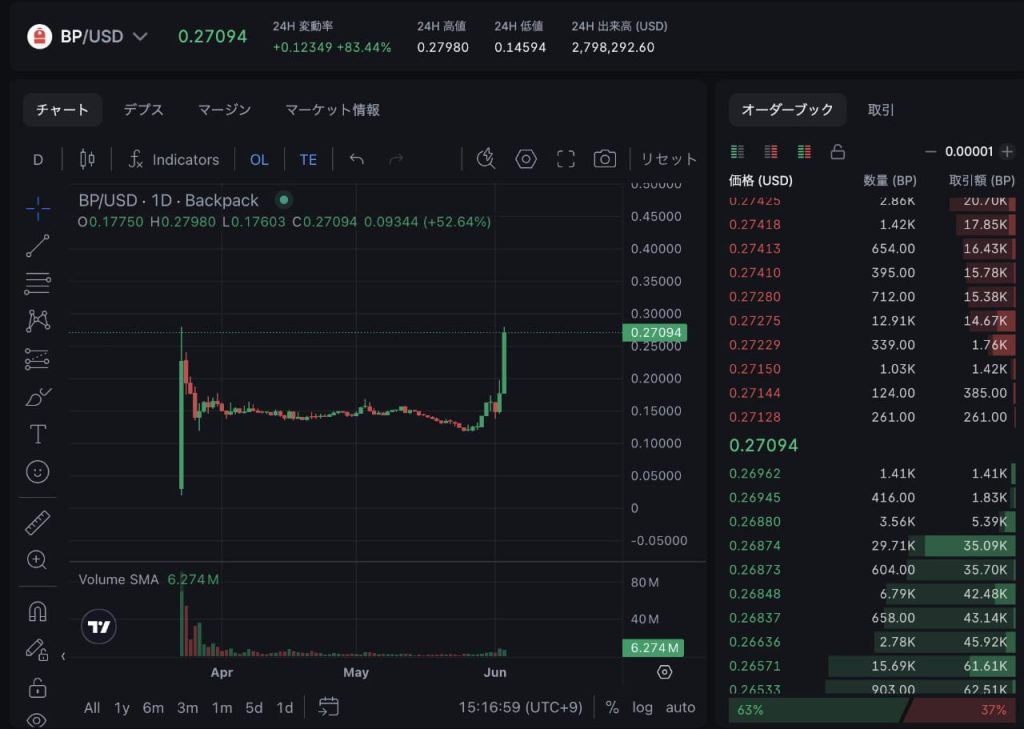
The valuation context matters here. Despite the 89% move, $BP’s fully diluted value sits at approximately $270 million, with a market cap of around $68 million, placing it roughly 391st on CoinGecko. For an exchange token attached to a platform building regulated securities infrastructure on Solana, those numbers still feel modest. The buying pressure reflects not just the announcement itself but the recognition that BP, relative to what Backpack is building, may still have significant room to run.
还是有点不一样 @Backpack_CN 的股票交易解读
最近交易所进入股票市场已经是雨后春笋一样的多了,目前来看每一家在合规上都达到了最低标准,基本都是和美国合规的券商合作,支持股票的权益,支持股票的转移,支持支持分红和公司行动。… https://t.co/GTAd9cIsN5 pic.twitter.com/FCtc2YzDJ2
— Phyrex (@PhyrexNi) June 2, 2026
Analysts tracking the space are asking the right question; Exchanges entering the stock market have been multiplying rapidly, and most of them meet the same baseline: partner with a U.S.-compliant broker, support stock entitlements, enable dividends and corporate actions, and let users say they can buy real stocks. That feature is no longer scarce. Practically every major exchange is building it or has already launched it.
What Makes Backpack Different?
The answer is in the account architecture. Backpack’s biggest distinction is that it integrates real U.S. stock holdings with Solana onchain stock formats into the same account logic. Users’ stocks can switch between traditional stock formats and onchain stock formats, not as a workaround, but as a native feature of how the platform is built.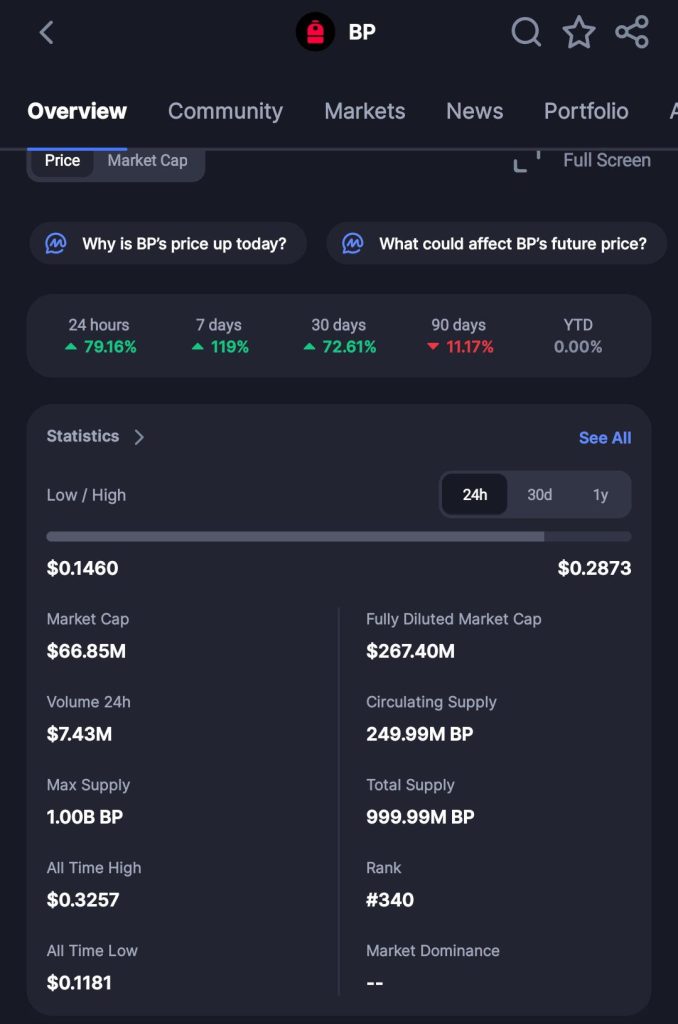
The traditional format taps into real-world liquidity from the NYSE and Nasdaq. The onchain format unlocks entirely new use cases for those same assets through DeFi. Before platforms like Backpack, when users bought U.S. stocks through a crypto exchange, the assets still sat idle in a brokerage account, hard to connect with anything happening onchain. The most they could do was hold, sell, collect dividends, or access margin through a traditional broker.
The evolution here is worth spelling out clearly. Crypto-circle stocks began as onchain synthetic instruments, “fake” stocks that tracked prices but carried none of the real ownership, dividend rights, or corporate action entitlements of the underlying shares. Exchanges then moved to offering “real” stocks through brokerage integrations, which was a genuine step forward. Most exchanges stop there.
Backpack takes those real stocks from the exchange account and migrates them onchain, making the onchain version real too. That is the leap. When a stock can move freely between its traditional format and its onchain format, it stops being just a holding. It becomes collateral. It becomes a margin asset. It becomes a liquidity asset. It becomes a component of a decentralized financial portfolio sitting alongside crypto positions in the same system.
A user’s NVDA, TSLA, or SPY holdings could, in the near future, sit alongside onchain lending positions, liquidity pools, or onchain insurance products inside the same decentralized account. That is not a feature. That is a new financial architecture.
Disclosure: This is not trading or investment advice. Always do your research before buying any cryptocurrency or investing in any services.
Follow us on Twitter @nulltxnews to stay updated with the latest Crypto, NFT, AI, Cybersecurity, Distributed Computing, and Metaverse news!