

Sui is currently vulnerable, block production on the Sui blockchain network came to a complete halt for almost an hour as new transactions could no longer be processed.
This surprising suspension immediately caught the attention of developers, users and market participants as activity on the whole ecosystem shrank to inactivity.
The team has formally flagged the occurrence, with Sui Network’s statement on X confirming the network stall affecting Sui Mainnet as the problem. Core team acknowledged being aware of the issue, investigating and working to solve it with confirmation that they may have transactions paused during this time.
These types of disruptions, especially those at the consensus layer, directly and or indirectly prevent the ability of a blockchain to finalize blocks leading to halting all on-chain operations until normal functionality can be restored.
Sui Mainnet is currently experiencing a network stall. The Sui Core team is actively working on a solution.
Be aware that transactions may be paused at this time. Updates will be shared as soon as they are available.
— Sui (@SuiNetwork) May 28, 2026
Contents
Transactions Freeze As Explorers Show Stagnant Chain Activity
While the stall continued, on-chain data quickly reported the extent of the problem. None of the new blocks were being produced across block explorers, including Suiscan and SuiVision, where the latest confirmed blocks remained static for a considerable amount of time.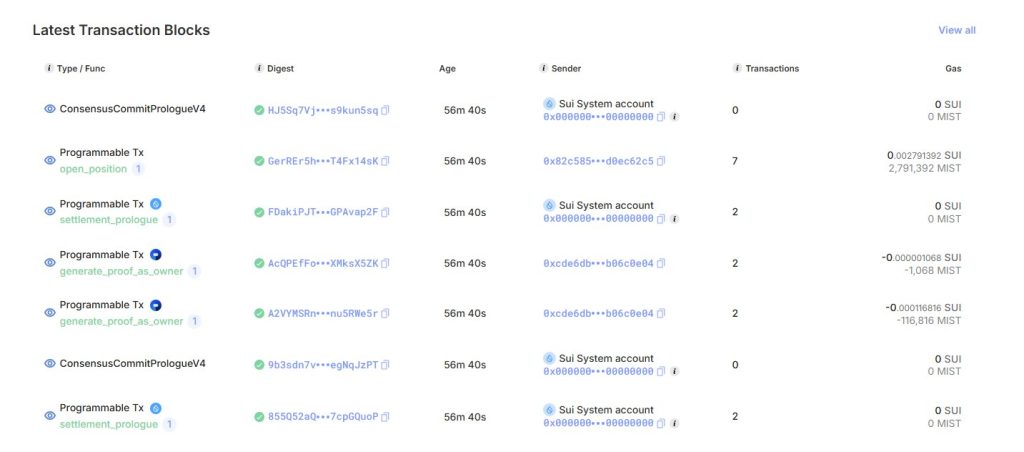
This stagnation essentially meant that users were unable to send, receive or interact with smart contracts on the network. Every outstanding transaction remained in a state of limbo as they waited for their confirmations to be processed when block production restarted.
Coverage of this report in the Coinminutes also pointed out that the freeze was almost one hour, raising worries about network reliability especially on apps that need real-time execution.
Temporary outages are not uncommon in blockchain systems, but continued stalls at the base layer roll even more salt into the wound, causing user frustration and amplification and scrutiny towards network design and resilience.
🚨 JUST IN: Sui Mainnet is currently downtime
Block production has stalled for nearly an hour. Latest blocks are frozen on Suiscan and SuiVision. All transactions are paused while the Core team works on a fix.
✅ Funds are 100% safe on-chain – no risk of loss.
This is the… https://t.co/k1MpEIROwC pic.twitter.com/BbjVpDwn0g
— Coinminutes (@coinminutes_en) May 28, 2026
Core Team Responds, Says Funds Are Safe
The funding was disrupted and the Sui Core team assures that all user funds remain 100% safe. The stall affects transaction processing and block validation, but it does not break the integrity of assets stored on-chain.
Although this is a common practice, such guarantee is especially significant in these cases as uncertainty about fund security and safety often leads to panic among users. The team wants to ensure that confidence is preserved while a technical remedy can be implemented, so they’re stating there is no risk of loss.
Simultaneously, it highlights the challenges of running high throughput blockchains. Sui is another smart contract platform with parallel execution and scaling ambitions, but it has a challenging consensus mechanism that comes with unique points of failure.
While the team has not yet revealed the exact underlying issue, preliminary evidence alludes to consensus-level problems rather than outside attacks or exploits.
DeFi Applications Stop Operations To Manage Risks
The effect of the network stall soon also spread beyond layer 1 and onto decentralized apps running on Sui. In response, projects like Bucket Protocol and Jackson halted deposits and withdrawals to protect users from possible inconsistencies.
This is precautionary and is common in DeFi as networks are NOT stable. Block production halting can make price feeds, contract states and transaction sequencing unreliable and enable more unwanted behavior.
These platforms are being temporarily halted in order to beat out any problems like transaction failures, improper balances or exploitable state changes from the (eventually resuming) asynchronous nature of their underlying network.
The collective action of the dApps demonstrates an interdependence among daily blockchain users; a problem at the infrastructure level can quickly trigger an Application-level outage in minutes.
Market Response: Sui Token Plummets
The technical difficulties also had a direct influence on market mood. Between this uncertain period, Sui token dropped nearly 8% to about $0.91.
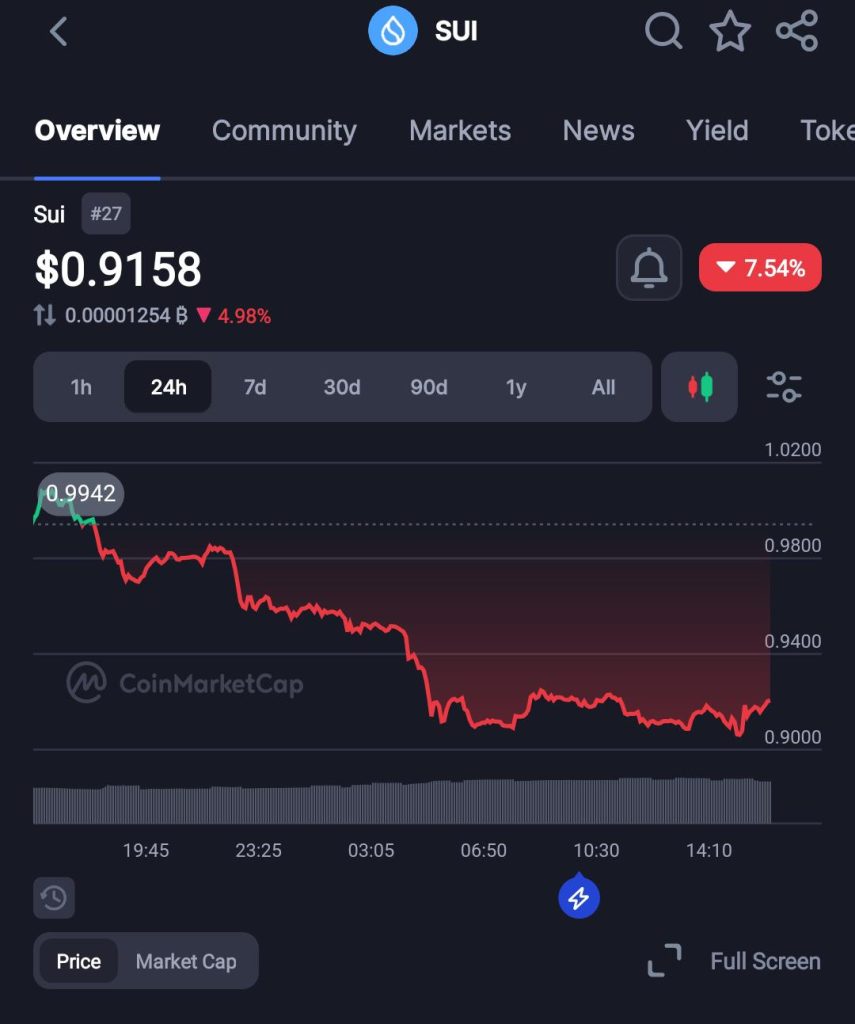
The performance of price during such outages usually indicates panic selling, and a loss of faith in network stability, at least for the next several hours. Operational risks, especially those hindering transaction finality and access to liquidity, will have traders responding in quick scurries.
Although the decline is a big one, it isn’t unprecedented. Once normal operations resume and confidence is restored, incidents like this one have aged well on other blockchain networks that usually tend to bounce back from temporary price declines.
Yet this raised a concern that persistent outages could have far-reaching consequences, especially if perceptions about reliability and uptime were influenced by its frequency.
Recurring Consensus Issues Raise Long Term Questions
This most recent stall is not an isolated instance. This reiterates a major outage back in January when the Sui network suffered from sustained downtime of around six hours. The incident also highlighted the need to address challenges related to consensus as it raised issues of how well the system can withstand stress.
This might necessitate further evaluation from developers and the larger community regarding the recurrence of such issues. With the increasing competition among blockchain networks to provide higher performance, scalability and decentralization, consistent uptime becomes a paramount aspect of their long-term adoption.
Solving these problems with Sui, however, will be necessary to ensure the sustainability of growth and the attraction of institutional as well as retail users that a high-throughput next-generation blockchain like Sui would desire.
Simultaneously, the relatively transparent communication from Core team and other ecosystem projects responding on time is indicative of a certain degree of operational maturity. Quickly detecting issues, notifying users, and coordinating mitigation is an essential component of effective crisis management.
While the team continues recovering full functionality, it will probably shift towards figuring out how this happened and putting protections in place to make sure there is not another incident like this going forward. For the time being, the incident serves as a reminder that even with complex blockchain designs comes simple technical fallout, and resilience is not just about design but response.
Disclosure: This is not trading or investment advice. Always do your research before buying any cryptocurrency or investing in any services.
Follow us on Twitter @nulltxnews to stay updated with the latest Crypto, NFT, AI, Cybersecurity, Distributed Computing, and Metaverse news!